By

CRCA/ECPAT Albania

Date

Sep. 09. 2026

CRCA/ECPAT Albania highlights child safety risks in tourism

A new report explores child sexual exploitation risks in Albania’s growing travel and tourism sector

By

CRCA/ECPAT Albania

Date

Sep. 09. 2026
CRCA/ECPAT Albania highlights child safety risks in tourism

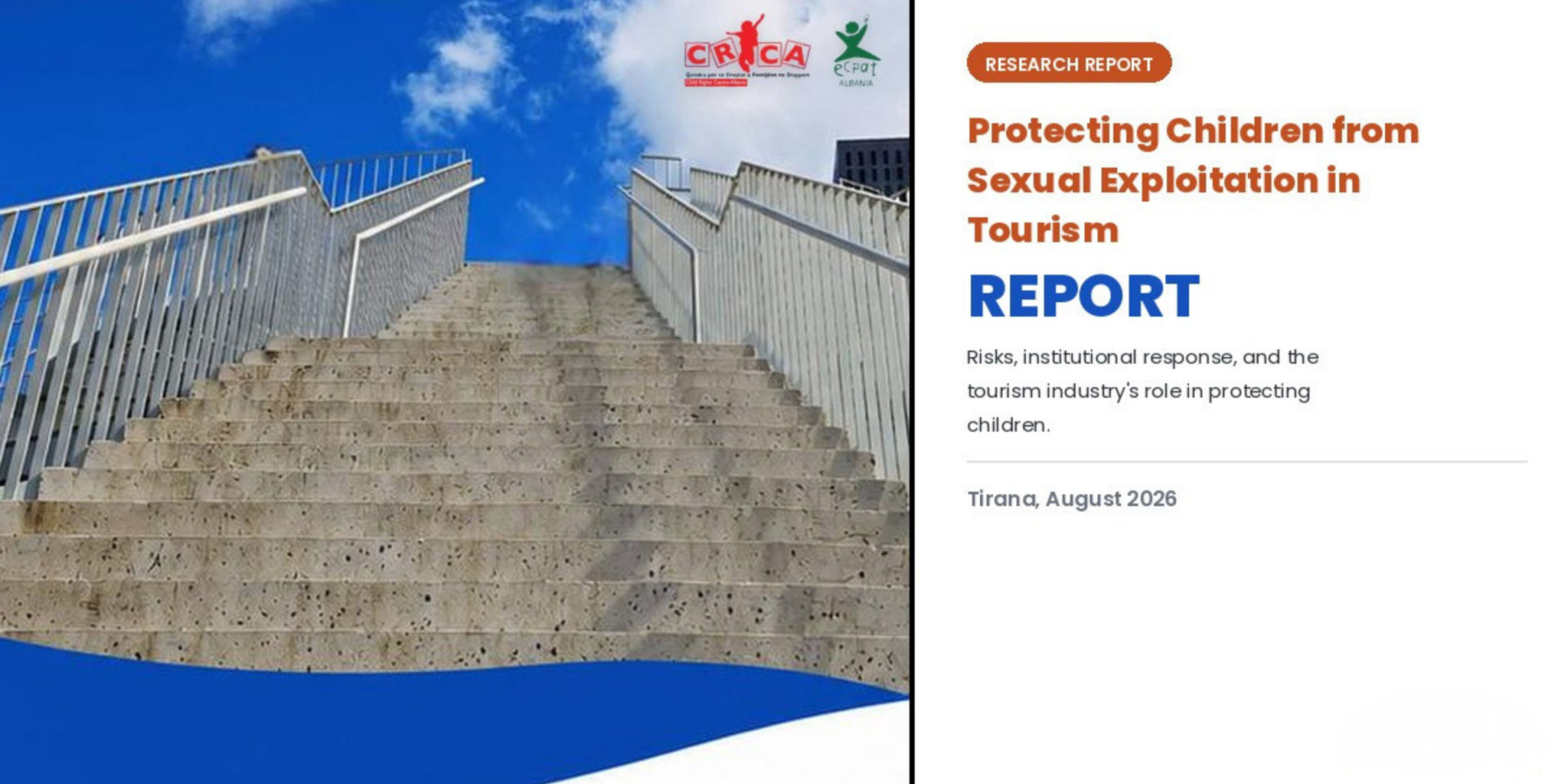
Albania welcomed 12.47 million foreign visitors in 2025, more than double the 5.69 million recorded in 2021. Against this backdrop, Protecting Children from Sexual Exploitation in Travel and Tourism in Albania, published by CRCA/ECPAT Albaniaon 22 August 2026, looks at developments between 2022 and 2026 and considers how the tourism sector can contribute to safer environments for children.

The report notes that tourism does not itself cause sexual violence or exploitation. However, factors such as seasonal employment, informality, short-term accommodation, anonymity, and digital platforms can create additional opportunities for exploitation and make cases harder to identify.

“Child protection cannot be a seasonal promise or a voluntary act. It must be a non-negotiable condition of safe, responsible and sustainable tourism in Albania. Tourism cannot develop through the sexual exploitation of children,” said Altin Hazizaj, Director of CRCA Albania.

Report highlights

The report presents several figures illustrating the wider context:

  • 176 proceedings involving sexual offences were registered in 2025, compared with 161 in 2024. Nearly 64% of identified victims were children.
  • In 2024, authorities identified 178 potential victims of trafficking, including 96 children.
  • Between 2021 and 2024, 4,447 new cases of children at risk or in need of protection were identified, while 370 child protection workers operate at local level.
  • iSIGURT.al received 615 reports in 2025, 46% more than the previous year, reflecting the connection between online risks and offline exploitation.

Recommendations for the tourism sector

According to the report, Albania has legislation addressing sexual offences against children and a broader child protection framework. However, tourism legislation could provide more specific guidance and responsibilities for businesses on prevention, identification and reporting.

CRCA/ECPAT Albania recommends that tourism businesses take practical steps to strengthen safeguards across the sector. These include:

  • Training staff to recognise potential warning signs, respond appropriately and refer concerns to the relevant authorities.
  • Verifying properties and providers, particularly for digital platforms and accommodation providers.
  • Providing clear and accessible reporting mechanisms and safety contacts for guests and staff.
  • Establishing procedures for the lawful retention of relevant booking data where this may support investigations.
  • Displaying reporting information in tourism destinations, including 112, ALO 116-111 and iSIGURT.al.
  • Improving coordination and data collection so that cases connected to travel, accommodation or tourism can be better identified and understood.
  • Informing people entering and leaving Albania about relevant legislation, penalties and reporting channels, as recommended for the Border Police.

CRCA/ECPAT Albania calls on the Council of Ministers, Parliament, the Ministry of Tourism and other responsible ministries, municipalities, the State Police, the justice system and the travel and tourism industry to translate these recommendations into measurable, funded and time-bound measures ahead of the next tourism season.

Cookies


This website requires the use of cookies to function properly. To learn more, please refer to our cookie policies.